Supreme Court Rules in Favor of Cox Communications in Copyright Case
**Excerpt:** The Supreme Court has ruled that Cox Communications cannot be held liable for copyright infringement by its subscribers, reversing a previous court ruling in a case brought by major music companies.
Key Points:
– The Supreme Court ruled unanimously in favor of Cox Communications regarding copyright infringement.
– The case involved claims from Sony and other music companies against Cox for allowing subscribers to infringe copyrights.
– The ruling reverses a previous decision by the U.S. Court of Appeals for the 4th Circuit.
– Justice Clarence Thomas stated that Cox did not intend for its service to be used for copyright infringement.
– The Trump administration supported Cox, arguing that internet service providers should not be liable for user actions.
Supreme Court Decision
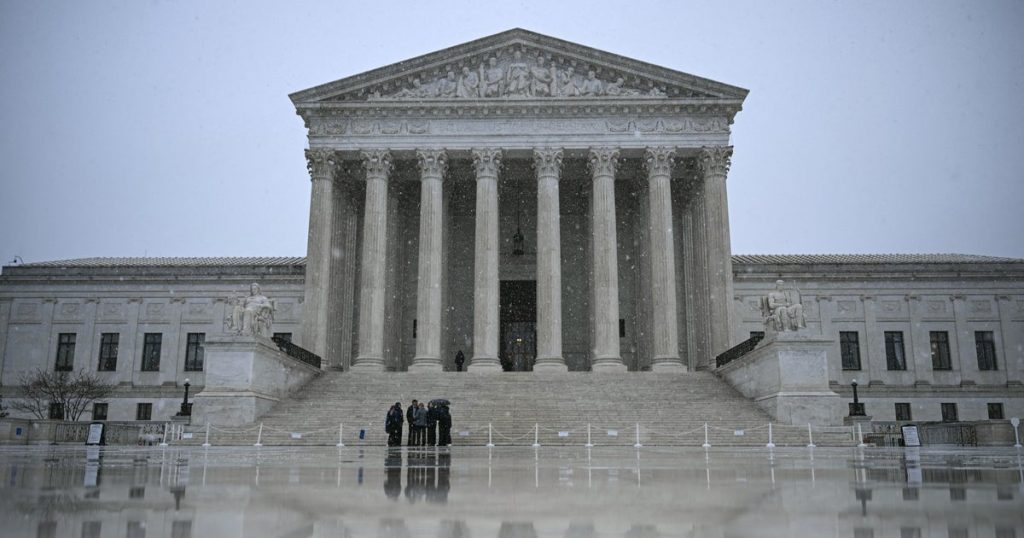
On March 25, 2026, the Supreme Court delivered a unanimous ruling in favor of Cox Communications in a significant copyright infringement case involving pirated music. The court found that Cox cannot be held liable for the actions of its subscribers using its network to infringe copyrights.
Background of the Case
The case, Cox Communications, Inc. v. Sony Music Entertainment, originated in 2018 when Sony and other prominent recording and publishing companies accused Cox of willfully infringing more than 10,000 copyrighted works. They argued that Cox was legally responsible for the piracy occurring on its network, as it continued to provide internet services to known infringers.
Initially, a jury ruled in favor of the music companies, awarding $1 billion in damages. However, the U.S. Court of Appeals for the 4th Circuit upheld part of the verdict but set aside the damages, sending the case back for a new trial.
Supreme Court’s Rationale
Justice Clarence Thomas, writing for the majority, emphasized that an internet service provider is not liable for user piracy unless it intended for its service to be used for infringement. He noted that Cox took measures to discourage copyright infringement, such as issuing warnings and terminating accounts of known infringers.
Thomas stated, “Cox did not tailor its service to make copyright infringement easier,” highlighting that the company merely provided internet access, which can be used for various purposes beyond infringement.
Dissenting Opinion
While Justices Sonia Sotomayor and Ketanji Brown Jackson agreed with the outcome, they expressed differing views on the reasoning. Sotomayor noted that the plaintiffs could not demonstrate that Cox had the intent necessary to be held liable under common-law aiding-and-abetting principles.
Conclusion
This ruling marks a significant moment in copyright law, clarifying the responsibilities of internet service providers in relation to user-generated content. The decision is seen as a victory for Cox Communications, with broader implications for how copyright infringement is handled in the digital age.