
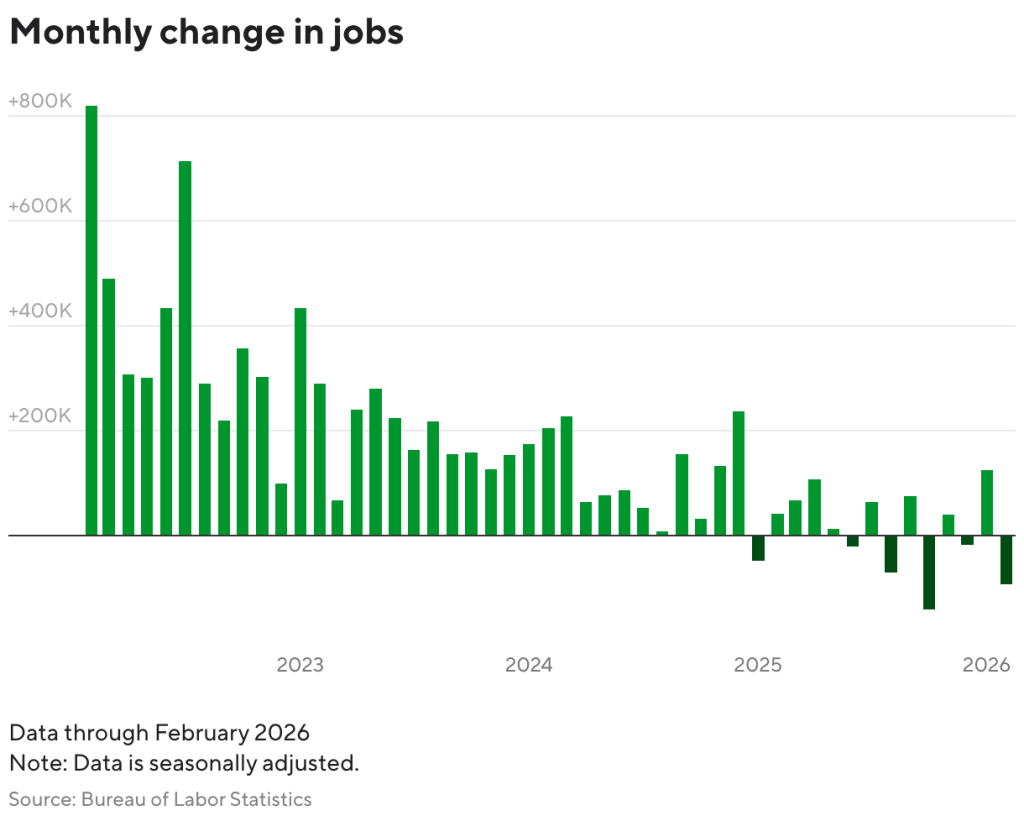
**Excerpt:** The U.S. job market faced an unexpected decline in February, with a loss of 92,000 jobs and an increase in the unemployment rate to 4.4%.
Key Points:
– The U.S. economy lost 92,000 jobs in February, contrary to expectations of growth.
– The unemployment rate rose to 4.4%, up from 4.3% in January.
– Job losses were primarily driven by a significant drop in the healthcare sector, losing 28,000 jobs.
– Economists are concerned about the implications for Federal Reserve policy amid rising inflation.
– Recent labor market data has shown overall weakness, with job turnover at a nine-year low.
Job Market Overview
The U.S. economy experienced a notable setback in February 2026, losing 92,000 jobs. This decline was unexpected, as economists had anticipated a payroll gain of approximately 60,000. The unemployment rate increased to 4.4%, up from 4.3% in January.
Sector Performance
The healthcare sector, which had previously been a source of job growth, saw a significant decline, shedding 28,000 jobs. The Labor Department attributed this decrease to recent strike activities, including a nurses’ strike in California that concluded late last month. Some analysts suggest that factors such as strikes and winter storms may have distorted the data, making it appear weaker than it is.
Nancy Vanden Houten, lead economist at Oxford Economics, stated that while January’s job report suggested strength in the labor market, February’s data indicates a potential downturn.
Revisions and Economic Implications
The Labor Department revised January’s job growth down by 4,000 and December’s by 65,000, indicating a weaker labor market than previously believed. Despite the possibility that the job market could be stronger than the data suggests, experts warn that the February report introduces uncertainty into the economy.
Seema Shah, chief global strategist at Principal Asset Management, noted that the February figures present a risk that the perceived strength in the labor market might not hold.
Federal Reserve Considerations
The decline in jobs presents a complex challenge for the Federal Reserve, which is balancing the need to stimulate employment against the risk of rising inflation. Experts indicate that cutting interest rates could support job growth but may also exacerbate inflation, particularly as oil prices rise due to the ongoing conflict in Iran.
Cory Stahle, an economist for Indeed Hiring Lab, emphasized that recent data reflects an average of zero net job creation over the past six months. The Fed’s next rate decision is expected on March 18, and analysts are keen to see how these job numbers will influence their strategy.
Conclusion
The February jobs report highlights ongoing challenges in the U.S. labor market, as job losses and rising unemployment rates contribute to a climate of uncertainty. With inflation concerns mounting, the Federal Reserve faces a critical decision regarding interest rates in the coming weeks.
Leave a Reply