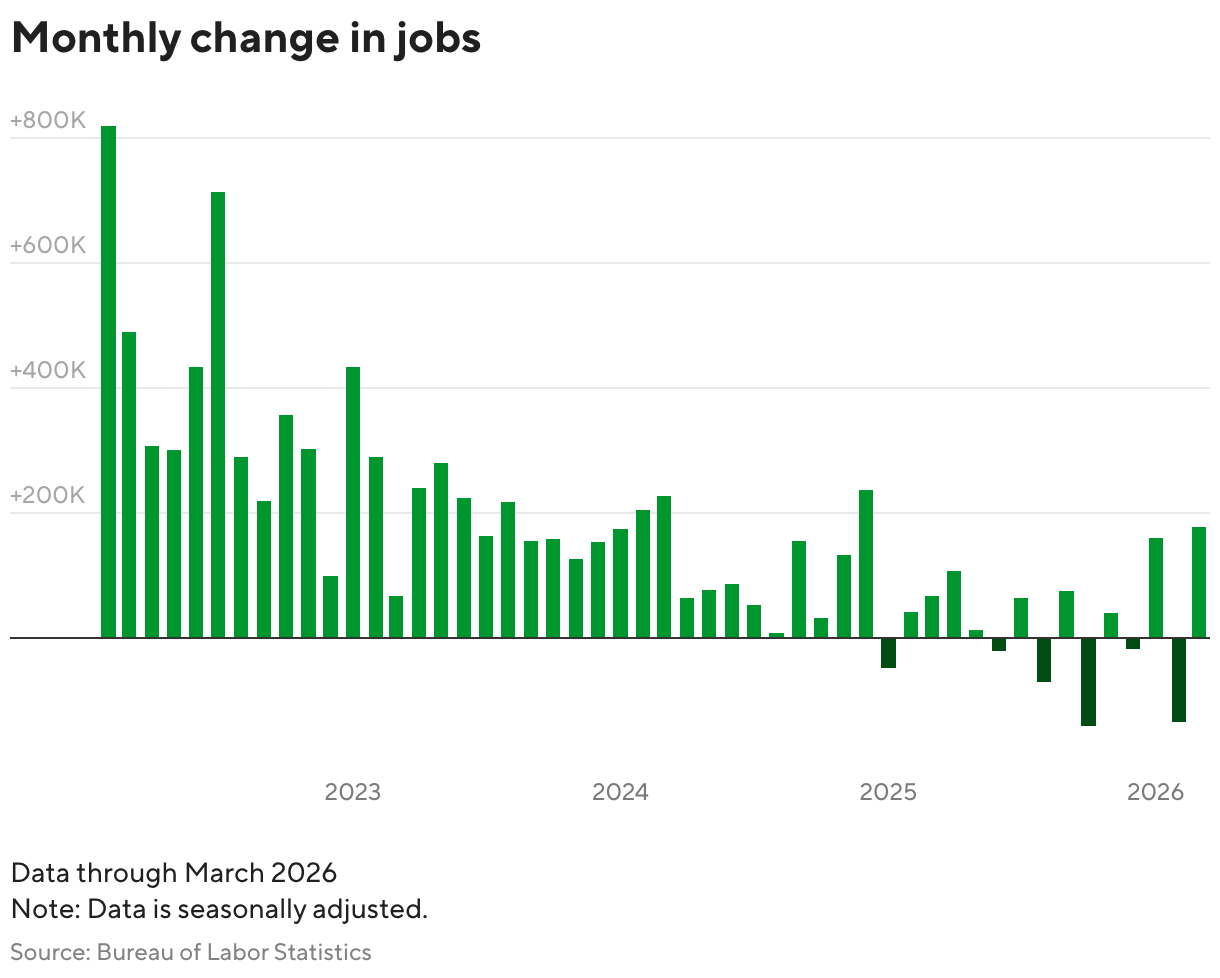
**Excerpt:** The U.S. job market showed significant improvement in March 2026, with 178,000 jobs added, surpassing expectations and lowering the unemployment rate.
Key Points
– **Job Growth:** 178,000 new jobs were added in March, exceeding forecasts of 60,000.
– **Unemployment Rate:** Dropped to 4.3%, down from 4.4% in February.
– **Sector Performance:** Health care led job gains with 76,000 positions, followed by construction and transportation.
– **Federal Employment Decline:** Federal jobs decreased by 18,000, continuing a downward trend.
– **Economic Outlook:** Rising energy prices due to the Iran war could impact future hiring and layoffs.
Full Article
Job Growth Overview
In March 2026, the U.S. job market demonstrated a robust recovery, with employers adding 178,000 jobs, according to data released by the Department of Labor. This figure significantly exceeded the consensus forecast of merely 60,000 new jobs.
Unemployment Rate
The unemployment rate decreased to 4.3%, down from 4.4% in February, indicating a positive trend in employment.
Sector Contributions
The health care sector was a major contributor to job growth, adding 76,000 jobs as nurses returned to work post-strikes. Other sectors also performed well, with the construction industry adding 26,000 jobs and transportation and warehousing contributing 21,000 positions.
Federal Employment
Despite overall job growth, federal employment saw a decline, with a reduction of 18,000 jobs. This ongoing decrease reflects broader trends in government hiring.
Reversal from Previous Month
The March employment figures mark a sharp turnaround from February’s unexpected job losses, which were revised to 133,000 from an initial estimate of 92,000. The previous month’s decline was attributed to strikes in the health care sector and adverse winter weather.
Economic Insights
Economists noted that the strong job numbers for March indicate areas of resilience within the labor market. Olu Sonola, head of U.S. economics at Fitch Ratings, highlighted the positive impacts of the health care sector’s recovery and gains in construction and manufacturing.
Despite these gains, public sentiment regarding job availability remains cautious. A recent Gallup poll indicated that 72% of Americans believe it is a bad time to seek employment, an increase from 54% the previous year.
Future Hiring Concerns
Concerns about future hiring persist, particularly regarding the impact of rising energy prices stemming from the ongoing conflict in Iran. Fuel costs have surged since military actions began, with gasoline prices exceeding $4 per gallon and oil prices surpassing $100 per barrel.
Layoff Trends
Layoffs have remained relatively low, with approximately 60,000 jobs cut in March—an increase from February but a decline compared to the previous year.
Impact on Interest Rates
The employment report is likely to influence the Federal Reserve’s approach to interest rates. While March’s job gains suggest a return to a robust labor market, analysts caution that slow job creation and a shrinking labor force highlight ongoing economic challenges. Some economists predict the Fed may delay any rate cuts initially planned for 2026 as it monitors the situation.
In summary, while March’s employment data reflects a rebound in job growth, the landscape remains complex with potential challenges ahead, particularly related to energy prices and public perception of the job market.
Leave a Reply