
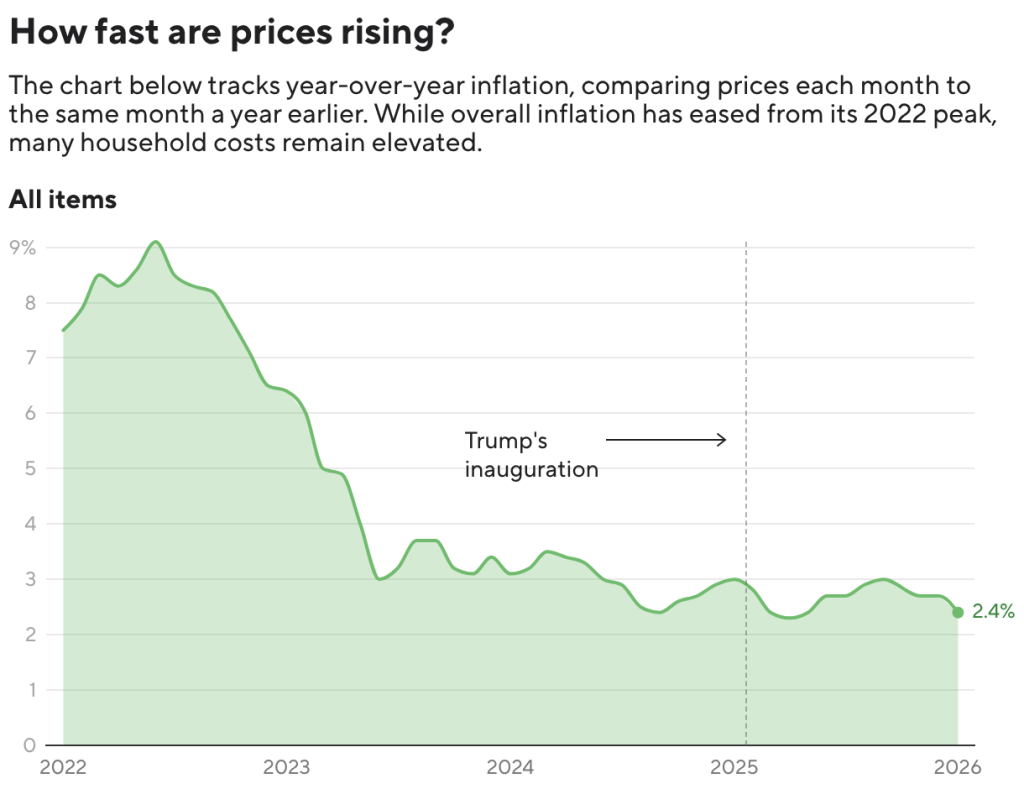
**Excerpt:** The latest Consumer Price Index indicates a slowdown in inflation, with prices rising at a 2.4% annual rate in January, below expectations.
Key Points:
– Consumer Price Index (CPI) rose by 2.4% year-over-year in January 2026.
– January’s inflation rate marks the slowest pace since May 2025.
– Core inflation, excluding food and energy, increased by 2.5%.
– Gasoline prices dropped by 7.5%, offsetting some cost increases in food and shelter.
– Experts predict potential Federal Reserve rate cuts may be delayed despite easing inflation.
Full Article
Overview of Inflation Trends
The Consumer Price Index (CPI) for January 2026 reported a year-over-year increase of 2.4%, falling short of economists’ predictions of 2.5%. This marks the lowest rate of inflation since May 2025 and a decrease from December’s 2.7% annual rate.
Breakdown of CPI Components
The CPI measures changes in a basket of goods and services commonly purchased by consumers, including food and apparel. In January, while food and shelter costs increased faster than the overall CPI, they were partially mitigated by a 7.5% decline in gasoline prices. Notably, the prices of ground beef and coffee rose by 17.2% and 18.3%, respectively, while egg prices saw a significant drop of over 34% compared to the previous year.
Core Inflation Insights
Core inflation, which excludes the more volatile food and energy sectors, increased by 2.5% over the past year, the lowest level since March 2021. The release of the January inflation data was delayed due to a recent partial government shutdown.
Consumer Sentiment on Cost of Living
Eased price pressures may offer relief to consumers, particularly those at the lower end of the income spectrum who are struggling with rising essential costs, such as utilities. In contrast, individuals with investments in the stock market, which has risen by 12% over the past year, generally report a more positive outlook on their financial situation.
Financial analyst Stephen Kates emphasized that it may take years for wages to grow sufficiently to outpace inflation, allowing consumers to regain the financial breathing room they once enjoyed.
Impact of Tariffs and Future Inflation Predictions
Research indicates that the tariffs enacted during the Trump administration have influenced pricing, but their impact on inflation has been less severe than anticipated. Current inflation pressures are likely to stem from an increase in disposable income due to tax refunds, lower interest rates, and heightened business investments.
Federal Reserve’s Response to Inflation Data
The latest CPI reading indicates a cooling inflation trend, edging closer to the Federal Reserve’s target rate of 2%. However, experts suggest that this data may not prompt immediate rate cuts from the Fed. Seema Shah, chief global strategist at Principal Asset Management, noted that while this is a reassuring sign for markets, it does not provide sufficient justification for short-term rate reductions. Wall Street analyst Adam Crisafulli anticipates that the Fed may consider its next interest rate cut during the meeting scheduled for June.
Conclusion
The January CPI report reflects a significant easing of inflationary pressures, with potential implications for consumer spending and Federal Reserve monetary policy in the upcoming months.
Leave a Reply