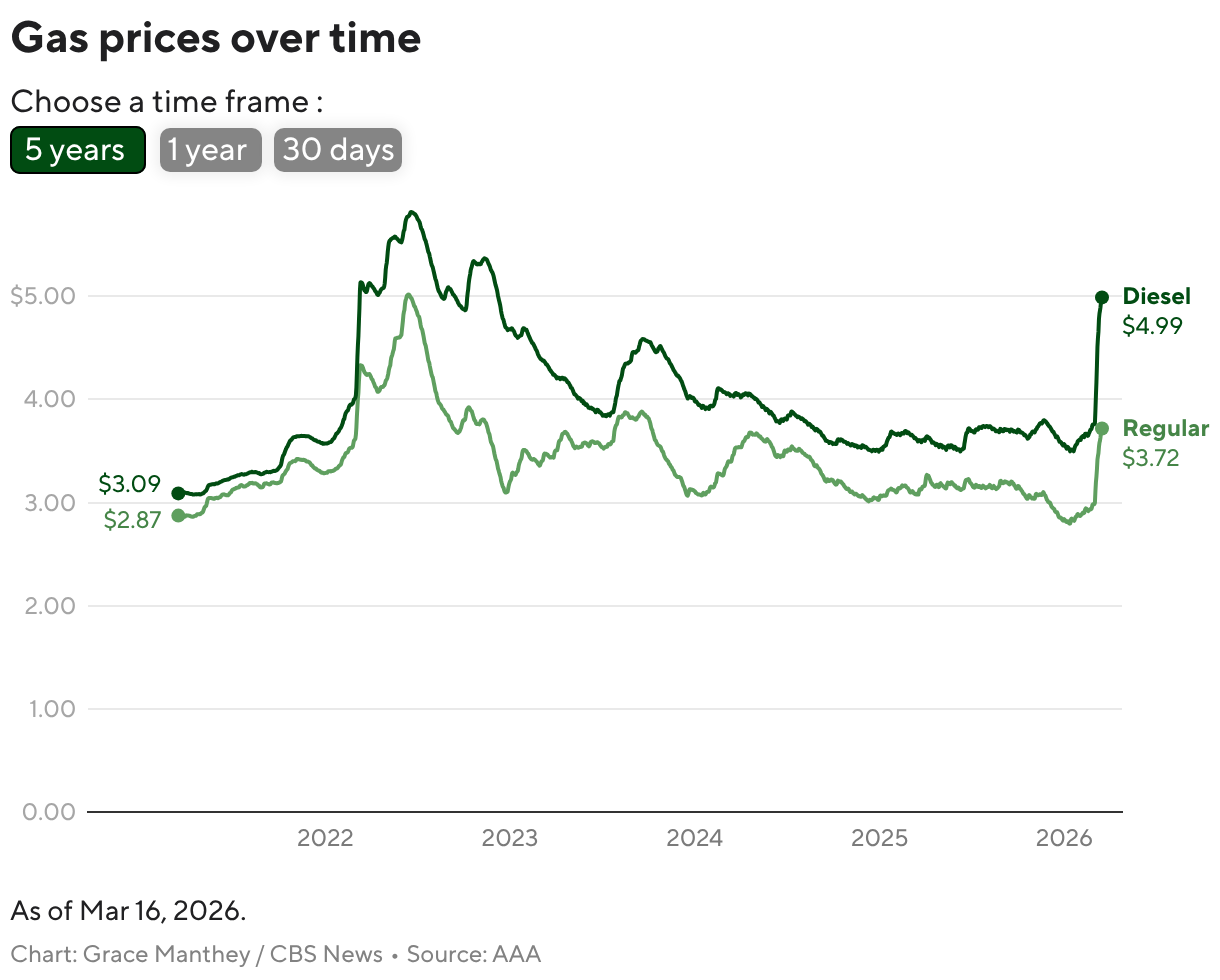
**Excerpt:** As gas prices continue to climb, experts suggest practical strategies to enhance fuel efficiency and reduce costs for drivers.
Key Points
– Gas prices have risen significantly due to ongoing geopolitical tensions.
– Proper tire inflation can improve fuel economy by up to 10%.
– Slowing down on highways can enhance fuel efficiency significantly.
– Avoiding hard acceleration and braking can lead to better gas mileage.
– Simple driving adjustments can save drivers a substantial amount on fuel costs.
Rising Gas Prices
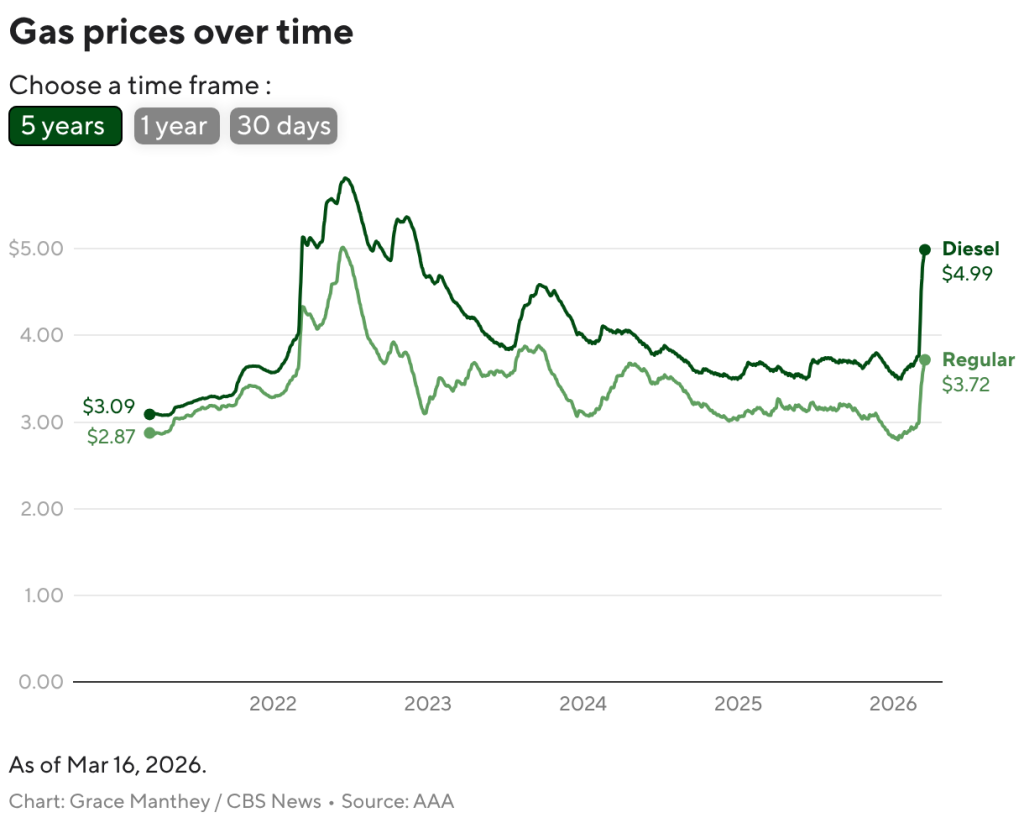
Gas prices have surged recently, reaching $3.72 per gallon, which is an increase of 74 cents, or approximately 25%, since the onset of the war in the Middle East. With fuel prices likely to remain high, experts are recommending several strategies for drivers to save on gas.
Maintain Proper Tire Pressure
One of the simplest ways to improve fuel efficiency is by ensuring that tires are properly inflated. According to the U.S. Department of Energy, maintaining the correct tire pressure can enhance gas mileage by about 3%, with some estimates suggesting improvements of up to 10%. The recommended tire pressure can usually be found on a sticker located on the driver’s side door jamb or in the owner’s manual.
David Bennett, a senior automotive manager at AAA, noted that “lower-inflated tires increase road resistance, leading to a less smooth drive and reduced acceleration.”
Adjust Driving Speed
Driving at higher speeds can decrease fuel economy. Experts advise maintaining a speed of around 65 miles per hour on highways, which is generally considered optimal for fuel efficiency. Sean Tucker, managing editor at Kelley Blue Book, explains that small speed adjustments can substantially impact mileage, indicating that reducing highway speeds by 5 to 10 mph can improve fuel economy by as much as 14%.
Smooth Driving Techniques
To maximize fuel efficiency, it is crucial to maintain a steady speed. Rapid acceleration and hard braking can significantly lower gas mileage—by about 15% to 30% at highway speeds and 10% to 40% in stop-and-go traffic, according to the Energy Department. Experts recommend coasting to a stop rather than rushing to a red light, as this conserves fuel and promotes smoother driving.
By implementing these strategies, drivers can mitigate the impact of rising gas prices and improve their overall fuel efficiency.
Leave a Reply