**Excerpt:** U.S. drivers have incurred an additional $8.4 billion in fuel costs due to rising gas prices since the onset of the Iran conflict, according to Democratic lawmakers.
Key Points
– U.S. drivers have paid an extra $8.4 billion in gas costs since the Iran war began.
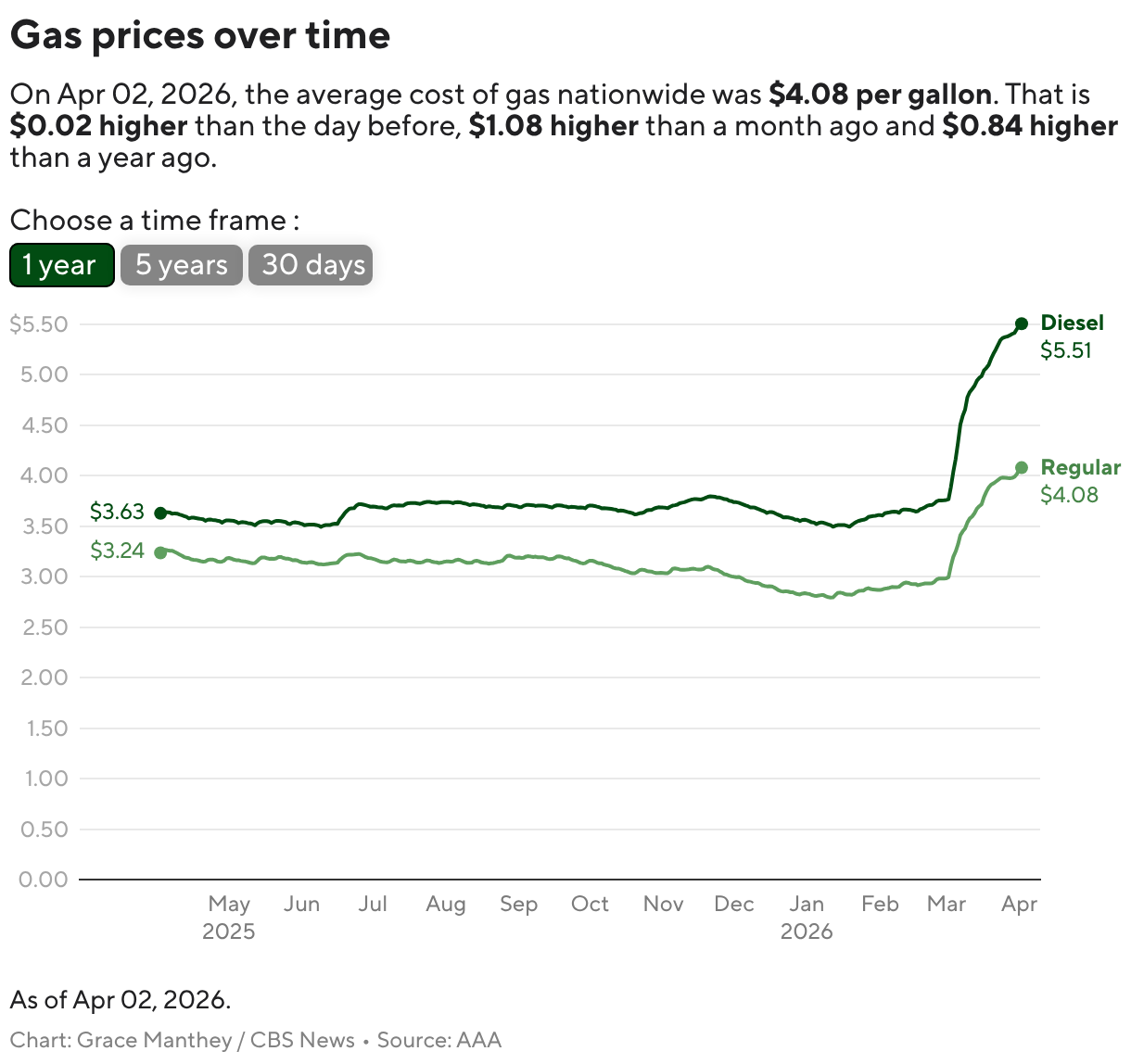
– Gas prices reached an average of $4.08 per gallon, the highest since 2022.
– Consumers are altering spending habits in response to increased fuel costs.
– Texas and California report the largest increases in gas expenses.
– Economic indicators suggest a potential slowdown in consumer spending.
Full Article
Overview of Increased Costs
American drivers have faced an additional $8.4 billion in fuel expenses since the onset of the Iran war, as reported by the Joint Economic Committee’s Democratic minority. This estimate is based on daily average gasoline prices tracked by AAA from February 28, when the conflict escalated, through March 31.
Current Gas Prices
As of Thursday, the average price of gas in the U.S. has risen to $4.08 per gallon, surpassing the $4 mark for the first time since 2022. This rise in prices has significantly impacted fuel costs for various vehicle types:
– **Toyota RAV4:** $58.26 to fill up, up by $15.02 (35% increase).
– **Ford F-150:** $144.65 to fill up, an increase of $37.29.
– **Toyota Camry:** $52.23 to fill up, or $13.46 more than before the conflict.
Consumer Spending and Economic Outlook
Despite the rising fuel prices, credit card data indicates that consumers are still spending. However, the Conference Board Consumer Confidence Index, released on March 31, reveals that fewer Americans plan to make significant purchases over the next six months. Heather Long, chief economist at Navy Federal Credit Union, commented on the potential for a muted second quarter in terms of spending and GDP growth due to inflation impacts.
Government Response
The Trump administration has characterized the spike in gas prices as a temporary issue, suggesting that prices will decrease once the conflict concludes. White House spokeswoman Karoline Leavitt stated that gas prices would return to previous lows following the end of “Operation Epic Fury.”
Changes in Consumer Behavior
A LendingTree study highlights that approximately one-third of Americans are adjusting their spending or savings habits due to higher gas prices. Another 35% plan to modify their budgets if fuel costs remain elevated.
Texas and California residents have been particularly affected, with Texas reporting an additional $1.04 billion in fuel costs and California $970 million since February 28. Other states, such as Florida and North Carolina, have also experienced significant increases in gas expenses.
Conclusion
The ongoing conflict has led to substantial financial strain on American households, with rising gas prices contributing to broader economic concerns. As drivers adapt to these increased costs, the potential for changes in consumer behavior may impact future spending trends.
Leave a Reply