**Excerpt:** Beef prices continue to soar, with ground beef costs reaching nearly 16% higher than a year ago, challenging household budgets across the U.S.
Key Points
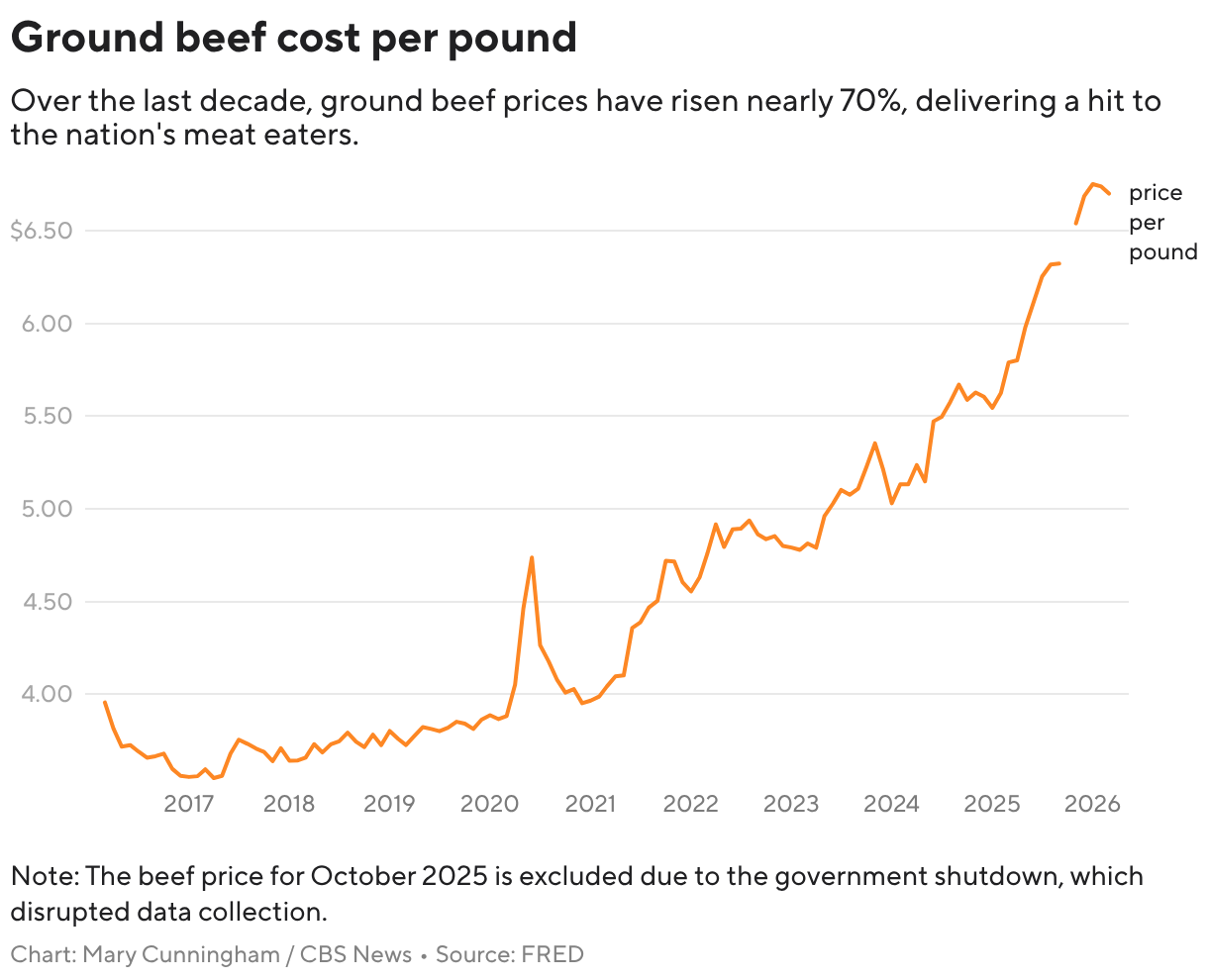
– Ground beef prices reached $6.70 per pound in March 2026, up 16% from the previous year.
– Beef steak prices also increased by 16%, currently averaging $12.73 per pound.
– The U.S. Department of Agriculture forecasts beef prices may climb over 10% in 2026.
– Factors contributing to the price surge include reduced cattle herds and increased feed costs due to drought and geopolitical events.
– Despite high prices, demand for beef remains strong, with only a 4% decrease in unit sales year-over-year.
Overview of Current Beef Prices
As of March 2026, ground beef prices in the U.S. have escalated to $6.70 per pound, marking a significant 16% increase from the same month in the previous year. Beef steaks are similarly affected, now averaging $12.73 per pound. These price hikes represent a stark contrast to prices from 2021, when ground beef was as low as $3.96 per pound.
Factors Driving Price Increases
Analysts suggest that there will be no immediate relief from these high beef prices. Derrell Peel, an agricultural economics professor at Oklahoma State University, stated, “There is nothing to suggest any relief from high beef prices.” Furthermore, the U.S. Department of Agriculture projects that beef prices could rise by over 10% in 2026, with estimates reaching as high as 18%.
The ongoing conflict in the Middle East is another factor exacerbating the situation, as it contributes to rising costs for essentials like gas and heating oil. The Consumer Price Index reported a 3.3% inflation increase in March 2026 compared to the previous year, indicating widespread economic pressure.
Shrinking Cattle Herds
A significant driver of the rising beef prices is the reduction in U.S. cattle herds, which have fallen to under 28 million— the lowest level since the 1960s. The Department of Agriculture attributes this decline to severe drought conditions that have diminished grazing land, leading ranchers to incur higher feed costs and, in some cases, reduce their herds.
The drought in 2022, coupled with the geopolitical tensions following Russia’s invasion of Ukraine, escalated feed prices, further complicating cattle maintenance. As a result, ranchers opted to sell many animals, which has long-term implications for beef supply.
Consumer Behavior Amid Price Increases
Despite the rising costs, American consumers continue to purchase beef. Data from NielsenIQ indicates that, as of late March 2026, unit sales of beef have only decreased by 4% year-over-year, while dollar sales have increased by 8%. Analysts suggest that the appetite for beef remains robust, even as consumers shift spending away from other proteins like pork and chicken.
There is a potential for recovery in cattle herds, as ranchers are beginning to slaughter fewer cattle and are increasing the number of breeding females, signaling a possible future rebound in supply. David Ortega, a food economist at Michigan State University, noted that these high prices may eventually encourage producers to rebuild herds, thereby helping to stabilize prices in the long term.
In summary, while immediate relief from high beef prices seems unlikely, there are signs that could lead to a more favorable situation for consumers in the future.
Leave a Reply