**Excerpt:** The initial forecast for the 2026 Atlantic hurricane season predicts slightly fewer storms than average, primarily influenced by expected El Niño conditions.
Key Points:
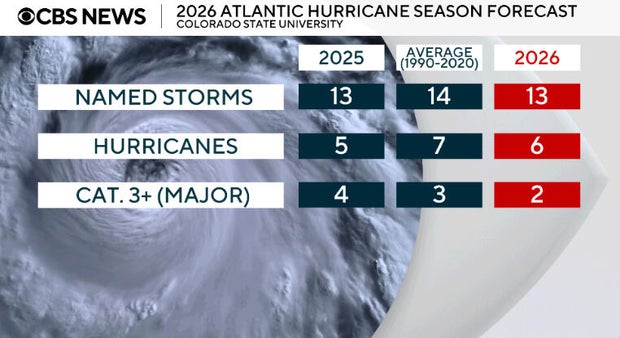
– Colorado State University’s forecast predicts 13 named storms, including 6 hurricanes and 2 major hurricanes.
– The 2026 season is expected to have 75% of the long-term average hurricane activity.
– El Niño conditions are anticipated, likely reducing the frequency and intensity of storms.
– A 32% chance exists for a major hurricane to make landfall on the U.S. coastline.
– Named storms will start with “Arthur,” followed by “Bertha” and others, continuing through the alphabet.
Overview of the 2026 Forecast
According to Colorado State University’s Tropical Cyclone research team, the 2026 Atlantic hurricane season is expected to be slightly below average, with a total of 13 named storms projected. This includes six hurricanes, two of which are expected to reach major hurricane status (Category 3 or higher). The season officially runs from June 1 to November 30, with peak activity typically occurring between August and October.
Factors Influencing the Forecast
The forecast indicates that the upcoming season’s activity will be approximately 75% of the long-term average, which is based on historical data showing an average of 14 named storms, seven hurricanes, and three major hurricanes per season. Last year’s season saw 13 named storms and five hurricanes, with none making direct landfall in the U.S.
Co-author Delián Colón-Burgos emphasized the importance of preparedness regardless of the forecast. “It gets people thinking about what’s coming in the next couple of months,” he stated.
The Role of El Niño
A significant factor contributing to the forecast is the expected emergence of El Niño, which is characterized by warmer ocean temperatures in the Pacific. This phenomenon typically leads to fewer and less intense hurricanes in the Atlantic due to increased vertical wind shear. The Climate Prediction Center estimates a 62% chance that El Niño will develop between June and August, potentially lasting until the end of 2026.
Uncertainties Ahead
While the forecast provides an early glimpse into the season, uncertainties remain, particularly concerning sea surface temperatures in the Atlantic. Colón-Burgos noted that current temperature trends are mixed, which could influence storm predictions as the season approaches.
Potential Impact on Landfall
The forecast estimates a 32% chance of a major hurricane making landfall along the U.S. coastline in 2026 and a 35% chance for the Caribbean. Although these percentages may appear low, researchers caution that even less powerful storms can pose significant risks to coastal communities.
Michael Bell, another co-author of the forecast, remarked, “It takes only one storm near you to make this an active season for you.” Last year marked a unique occurrence, as no hurricanes struck the U.S. for the first time in a decade, although some Caribbean islands faced severe impacts.
Naming the Storms
The World Meteorological Organization has released the list of names for 2026, starting with “Arthur.” The list includes names such as “Bertha,” “Cristobal,” “Dolly,” “Edouard,” and “Fay,” continuing in alphabetical order until “Vicky” and “Wilfred.” A storm is named once its maximum wind speeds reach 39 mph, and it becomes a hurricane at 74 mph.
With significant storms capable of causing catastrophic damage, communities in hurricane-prone areas are urged to prepare for the upcoming season, regardless of the forecast’s predictions.
Leave a Reply