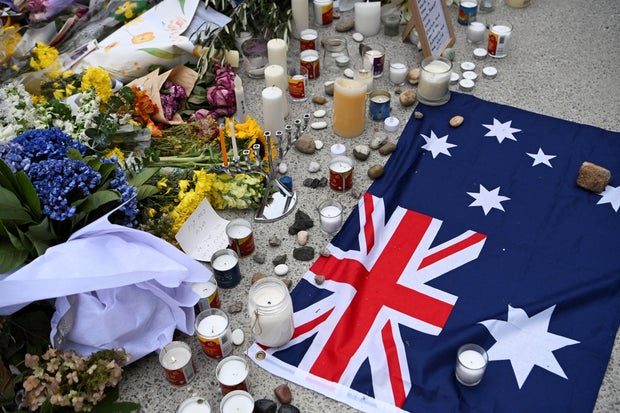
**Excerpt:** Two suspects involved in the Bondi Beach terror attack reportedly underwent training in the Philippines, where Islamist insurgency has persisted for decades.
**Key Points:**
– The suspects spent November in the Philippines before the attack.
– Australian officials have linked the attack to ISIS ideology.
– The region has a long history of Islamist militant activity.
– Abu Sayyaf, a militant group in the Philippines, has ties to ISIS.
– Training for foreign militants in the Philippines presents significant challenges.
Overview of the Attack
Two suspects, a father and son, involved in the terror attack during a Hanukkah event at Bondi Beach, Australia, reportedly spent most of November in the Philippines. Authorities are investigating the nature of their trip, which coincided with the planning of the attack.
Prime Minister Anthony Albanese stated that the motive behind the attack appears to be linked to ISIS ideology. New South Wales Police Commissioner Mal Lanyon confirmed the suspects’ travel history, emphasizing the need for further inquiries into their activities during their time in the Philippines.
Training in the Philippines
The suspects, identified as Sajid Akram, 50, and his 24-year-old son Naveed Akram, reportedly listed Davao as their final destination in the Philippines. Australian public broadcaster ABC indicated that the men may have received military-style training, according to security sources.
Tom Smith, an expert on security and terrorism in the Philippines, noted that while individuals may network among militant groups, such occurrences are rare and often exaggerated.
History of Islamist Insurgency
The Philippines has faced Islamist insurgency for nearly a century, with groups like the Moro Islamic Liberation Front (MILF) and the Moro National Liberation Front (MNLF) being prominent players. These groups have historically influenced the region’s militant landscape.
However, smaller factions, such as Abu Sayyaf, have gained notoriety for their violent tactics, including kidnappings and bombings. Despite being fragmented, some factions of Abu Sayyaf maintain ideological links to ISIS, though their operational capabilities have diminished in recent years due to military pressure and local governance improvements.
Challenges of Terror Training
Philippine military and police officials report no recent indications of foreign militants operating in the southern regions of the country. Tom Smith emphasized that gaining access to training with groups like Abu Sayyaf would be challenging for foreigners, particularly without local language skills.
While training camps exist in the region, particularly associated with the MILF and MNLF, it is unlikely that the Bondi Beach attackers would have been affiliated with them, given the political landscape and operational differences.
Conclusion
The connection between the Bondi Beach attack suspects and their alleged training in the Philippines highlights ongoing concerns about international terrorism and the complexities surrounding militant activities in Southeast Asia. As investigations continue, authorities aim to uncover the full extent of the suspects’ connections and training.
Leave a Reply