**Excerpt:** The Senate has approved the National Defense Authorization Act, a $900 billion defense policy bill, with bipartisan support, sending it to President Trump for signature.
Key Points
– The Senate passed the NDAA with a 77-20 vote.
– The bill allocates $900 billion for defense policy and includes a 3.8% pay raise for service members.
– Provisions include prohibiting certain diversity programs and authorizing military aid to Ukraine.
– Concerns raised over military aircraft operations near D.C. airspace.
– The House approved the bill last week with a vote of 312-112.
Senate Approval of NDAA
On Wednesday, the Senate approved the National Defense Authorization Act (NDAA), a comprehensive $900 billion defense policy bill, with a strong bipartisan vote of 77 to 20. The bill now awaits President Trump’s signature.
Bipartisan Support
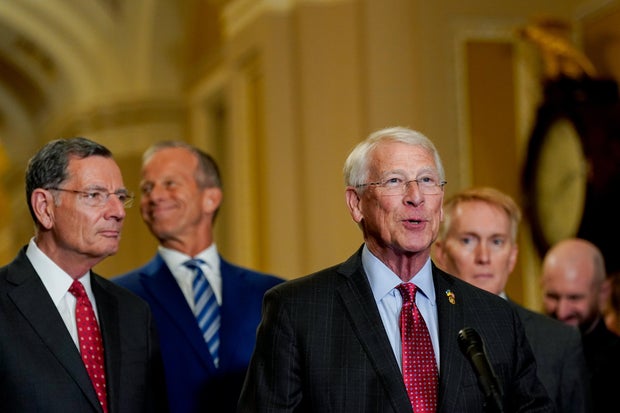
Senator Roger Wicker, a Republican from Mississippi and chair of the Senate Armed Services Committee, emphasized the bill’s bipartisan history. “This will be the 65th consecutive year that Congress has come together across the aisle to send the president a bill designed to sustain and strengthen the national defense,” he stated.
Key Provisions of the NDAA
The NDAA is a crucial piece of legislation that outlines defense priorities for the coming year. This year’s bill, which exceeds 3,000 pages, seeks to codify over a dozen of President Trump’s executive orders. Notable provisions include:
– A 3.8% pay raise for all service members.
– A ban on diversity, equity, and inclusion programs at the Department of Defense.
– Authorization for active-duty military deployment along the U.S.-Mexico border.
– Implementation of a “Golden Dome” missile defense shield.
Additionally, the bill allocates $400 million in military assistance for Ukraine over the next two fiscal years.
Controversies and Concerns
While the House passed the NDAA last week with a vote of 312 to 112, some lawmakers expressed concerns regarding military aircraft operations near Ronald Reagan Washington National Airport. National Transportation Safety Board chair Jennifer Homendy criticized a provision in the NDAA, stating it “does not in any way enhance safety” and reverses previous safety measures.
Senators Ted Cruz and Maria Cantwell are working on a measure known as the ROTOR Act to tighten regulations in D.C. airspace. Cruz reported that there has been “significant progress” toward passing this measure.
Conclusion
The NDAA reflects ongoing congressional efforts to address national defense priorities, but it also highlights the complexities and challenges lawmakers face in balancing various interests and safety concerns. The bill’s passage underscores a continued commitment to military funding and support for defense initiatives.
Leave a Reply