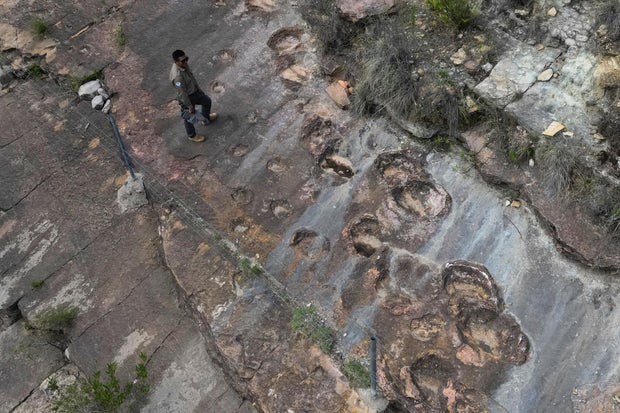
**Excerpt:** Researchers have discovered a remarkable collection of dinosaur footprints in Bolivia, showcasing the creatures’ attempts to swim, a finding that may reshape our understanding of their behavior.
Key Points
– **Extensive Findings:** A team from Loma Linda University documented 16,600 theropod dinosaur footprints in Bolivia.
– **Swimming Evidence:** The footprints indicate that some dinosaurs attempted to swim, leaving behind 1,378 traces in the sediment.
– **Preservation Threats:** Despite their age, the footprints face threats from human activity, including farming and construction.
– **Behavior Insights:** The footprints provide insights into dinosaur behavior, revealing how they moved and interacted with their environment.
– **Future Research:** Ongoing studies are expected to uncover more footprints and enhance understanding of dinosaur life.
Discovery of Dinosaur Footprints
In Bolivia’s central highlands, a significant discovery of fossil footprints has been made, shedding light on the behavior of theropod dinosaurs. These footprints, documented by paleontologists primarily from California’s Loma Linda University, represent the highest number of theropod footprints recorded globally.
The Findings
Research spanning six years revealed a total of 16,600 footprints from theropods, including the Tyrannosaurus rex. The newly published study in the journal PLOS One emphasizes the unparalleled abundance of these footprints at the site located in Toro Toro, a village and national park in the Bolivian Andes.
Roberto Biaggi, a co-author of the study, noted the site holds several world records for dinosaur footprints, highlighting its significance.
Evidence of Swimming
The study also identified that these dinosaurs made awkward attempts to swim, leaving behind 1,378 traces in the soft lake-bottom sediment. The longest swim trackway documented measures over 130 meters, making it the longest exposed swim trackway in the world. These tracks were preserved as water levels rose, protecting them from erosion over millions of years.
Preservation Challenges
While the footprints have survived for over 60 million years, they are currently threatened by human activities. Farmers and quarry workers have historically disrupted the footprint-covered plateaus, and recent highway construction nearly destroyed a major site before intervention.
Experts suggest that these disturbances could explain the area’s lack of skeletal remains, which are typically found in other regions like Argentina’s Patagonia.
Insights into Dinosaur Behavior
The footprints provide crucial insights into the daily lives of dinosaurs, revealing their movement patterns and social interactions. Paleontologists can determine various behaviors, such as walking speeds and directional changes, based solely on the footprints.
The reason for the congregation of dinosaurs at this site remains unclear. Some researchers suggest they may have been drawn to a large ancient freshwater lake, while others propose they were fleeing from a threat or searching for a new habitat.
Future Research Directions
The team anticipates that further explorations will yield more footprints, enriching the understanding of dinosaur behavior and ecology. Biaggi expressed optimism about the potential for ongoing discoveries at this significant site.
Recent discoveries of dinosaur footprints around the world, including a trail in England and others in the U.K., underscore the growing interest and importance of paleontological research in understanding prehistoric life.
Leave a Reply