**Excerpt:** The interstellar comet 3I/Atlas is set to make its closest approach to Earth this week, offering a unique opportunity for astronomers.
Key Points:
– The comet will pass within 167 million miles of Earth on Friday.
– 3I/Atlas is estimated to be between 1,444 feet and 3.5 miles in size.
– It will come closer to Jupiter in March, at a distance of 33 million miles.
– This is the third known interstellar object to visit our solar system.
– NASA continues to observe the comet as it fades from view.
Overview of 3I/Atlas
The interstellar comet 3I/Atlas is making its closest approach to Earth this week, reaching a distance of 167 million miles (269 million kilometers) on Friday. First discovered over the summer, the comet is on a trajectory that will take it back into interstellar space after its brief visit to our solar system.
Characteristics of the Comet
NASA has been closely monitoring 3I/Atlas, which is estimated to measure between 1,444 feet and 3.5 miles in size. As it approaches Earth, amateur astronomers are encouraged to use telescopes to observe the comet, which is gradually fading as it exits our solar system.
Future Trajectory
After its close encounter with Earth, 3I/Atlas will come nearer to Jupiter in March, passing within 33 million miles of the gas giant. According to Paul Chodas, director of NASA’s Center for Near Earth Object Studies, the comet will not return for many years, with its next significant approach expected in the mid-2030s.
Significance of the Discovery
3I/Atlas is the third confirmed interstellar object to pass through our solar system. Unlike comets such as Halley’s, which originate from the icy edges of our solar system, interstellar comets like 3I/Atlas come from distant star systems. The discovery of this comet adds to our understanding of celestial bodies and their origins.
Observations and Theories
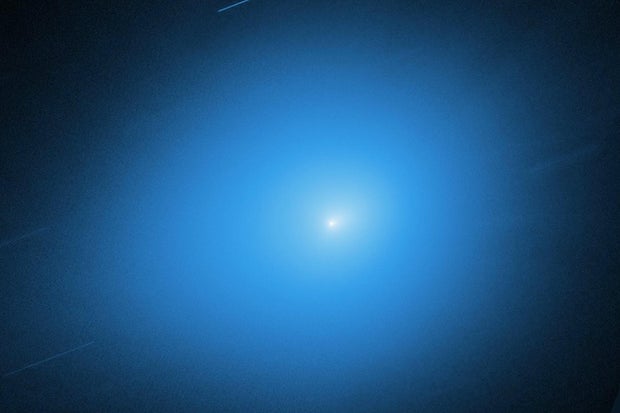
NASA has released images of 3I/Atlas taken by various telescopes, including the Hubble Space Telescope. Some scientists have speculated about the comet’s origins, with Harvard scientist Ari Loeb suggesting it could potentially have alien origins. However, the prevailing view remains that it is a natural celestial object.
As 3I/Atlas continues its journey, NASA and astronomers worldwide are eager to gather more data and images of this unique interstellar visitor.
Leave a Reply