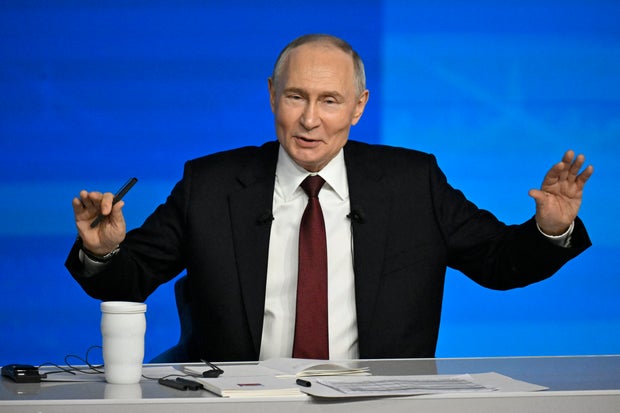
**Excerpt:** Ukraine has reportedly struck a tanker linked to Russia’s “shadow fleet” in the Mediterranean, while President Putin accuses Ukraine of lacking readiness for peace negotiations.
Key Points:
– Putin claims Ukraine is unwilling to negotiate peace, insisting on territorial concessions.
– Ukraine’s SBU claims a successful drone strike on a tanker part of Russia’s sanctions-evading fleet.
– The tanker, named Qendil, was reportedly empty during the strike, minimizing ecological risks.
– The EU has pledged over $100 billion in support for Ukraine but struggles to access frozen Russian assets.
– Putin threatens repercussions for any European nations attempting to use Russian frozen funds.
Article
Putin’s Stance on Peace Negotiations
Russian President Vladimir Putin stated that Ukraine shows “no willingness” to engage in peace talks, blaming Kyiv for the ongoing conflict, which he refers to as a “special military operation.” He expressed openness to negotiations but emphasized that Ukraine must accept significant territorial losses and some demilitarization—conditions that Ukraine has consistently rejected.
During a year-end press conference, Putin asserted that Russian forces have gained a strategic advantage and are expected to capture more territory along the approximately 600-mile front line in eastern Ukraine. He claimed, “Our troops are advancing… the enemy is retreating in all sectors.”
Ukraine’s Strategic Attack
As Putin made his remarks, Ukraine announced a significant military action, reportedly striking an oil tanker linked to Russia’s “shadow fleet” in the Mediterranean Sea. The operation was described as unprecedented, with Ukraine’s SBU intelligence agency confirming the drone strike on the Oman-flagged tanker Qendil, which was empty at the time.
The SBU stated that the attack aimed to disrupt Russia’s circumvention of international sanctions, asserting the legitimacy of the target under international law. A video shared by the SBU showed multiple explosions on the tanker.
European Union’s Support for Ukraine
In response to the ongoing conflict, the European Union has committed over $100 billion in aid to Ukraine. However, the bloc faced challenges in agreeing to use frozen Russian assets to fund this package, leading to the decision to provide an interest-free loan against its budget.
EU leaders, including German Chancellor Friedrich Merz, indicated that these funds would cover Ukraine’s military and economic needs for the next two years. Nevertheless, the use of frozen Russian assets remains contentious, with some member states resisting the idea.
Putin’s Warnings
Putin has threatened severe consequences for European nations that might attempt to utilize frozen Russian funds, labeling such actions as “daylight robbery.” He warned that repercussions could be grave for those involved.
In summary, the situation remains tense as Ukraine continues its resistance against Russian aggression while seeking support from Western allies, and Russia maintains its stance on territorial demands and military operations.
Leave a Reply