
**Excerpt:** Economists project a mixed bag for the U.S. economy in 2026, with ongoing inflation challenges and uncertain housing affordability.
Key Points
– **Affordability Concerns:** Inflation remains elevated, impacting household budgets despite a cooling trend.
– **Interest Rate Outlook:** The Federal Reserve may cut rates further, but inflation pressures could dictate policy.
– **Housing Market Trends:** Modest improvements in housing affordability expected, with some cities seeing price declines.
– **Job Market Predictions:** Hiring could increase, influenced by economic growth and tariff effects.
– **Stock Market Performance:** Concerns over AI stock valuations may affect investor sentiment, despite an overall positive forecast.
Full Article
Resilience of the U.S. Economy in 2025
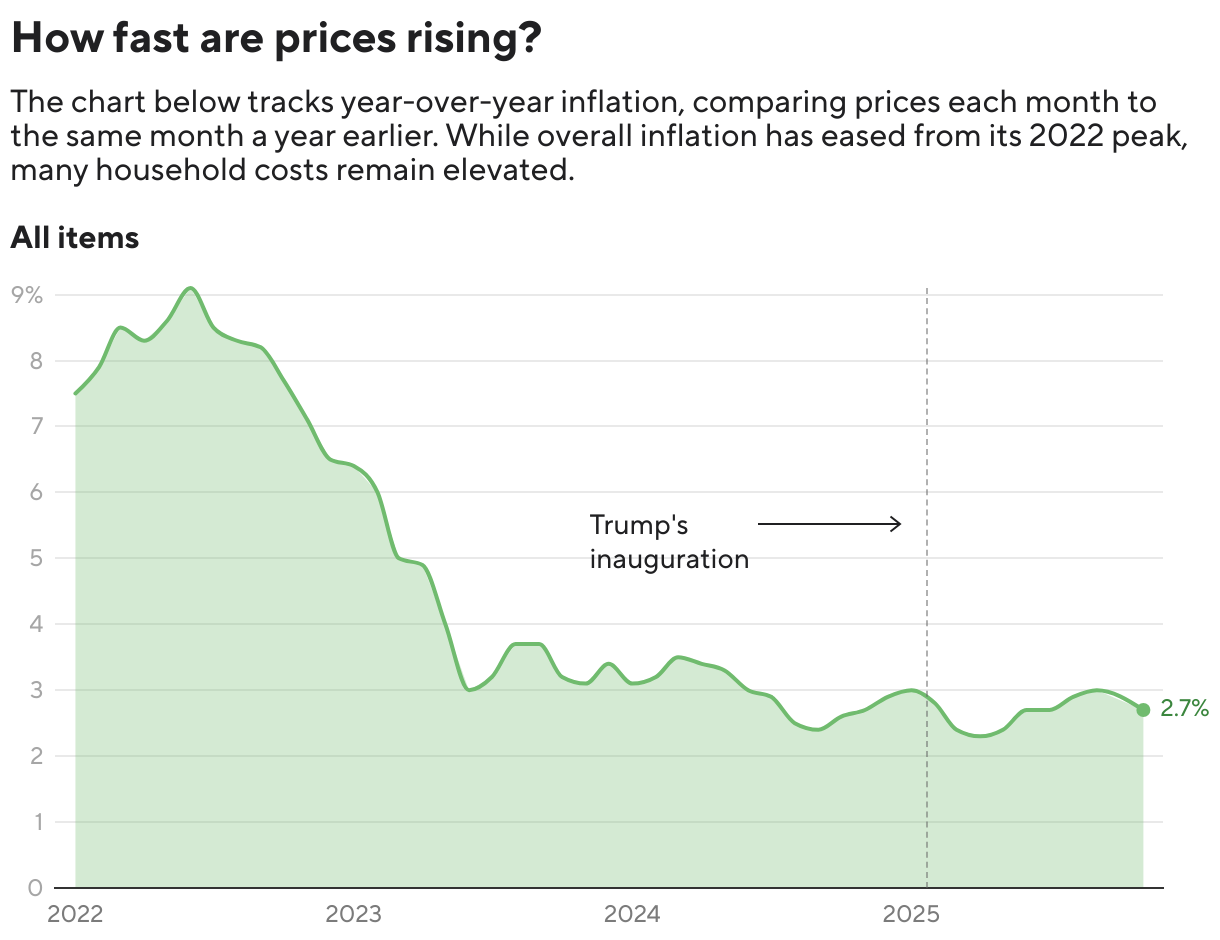
The U.S. economy displayed unexpected resilience in 2025, with growth accelerating while inflation remained relatively contained despite significant tariffs imposed during the Trump administration. However, many Americans have yet to experience the benefits of this growth, particularly regarding the cost of living.
Key Economic Questions for 2026
**1. Will Affordability Improve?**
Experts suggest that affordability is unlikely to improve significantly in the short term. While inflation has decreased from its peak in 2022, prices remain high, affecting household budgets. A recent CBS News poll indicates that around 70% of Americans struggle with basic expenses such as food and housing. Utility costs are also rising, with an average monthly bill of $265—up 12% from the previous year. The Federal Reserve predicts inflation will cool to about 2.4% in 2026, still above its 2% target, which could continue to strain family finances.
**2. Will the Federal Reserve Continue to Cut Interest Rates?**
The Federal Reserve faces a challenging decision regarding interest rates. After three consecutive cuts beginning in September, the Fed’s dual mandate to control inflation and unemployment creates conflicting pressures. While inflation remains higher than desired, rising unemployment may necessitate further rate reductions. The Fed’s December forecast included only one additional rate cut for 2026, but some economists anticipate more cuts if labor market conditions worsen.
**3. Will Housing Become More Affordable in 2026?**
Housing affordability may improve modestly in 2026, according to Chen Zhao, head of economics research at Redfin. Mortgage rates are expected to remain in the low 6% range, and home prices may grow at a slower pace than incomes. However, significant changes in affordability are not expected overnight. A Realtor.com analysis suggests that home prices could decline in several major U.S. cities, particularly in the Southeast and West.
**4. Will the Job Market Pick Up Steam?**
Hiring may improve as economic growth accelerates and tariff effects diminish. Goldman Sachs forecasts average payroll gains of 70,000 per month in 2026, more than double the 32,000 average in 2025. Wages could rise by 2.3%, up from 1.9% this year. However, some economists caution that companies may increasingly adopt artificial intelligence, which could limit job growth.
**5. Are Stocks in a Bubble?**
Concerns about the valuation of AI-related stocks are expected to persist. While the S&P 500 is projected to finish the year with significant gains, some investors worry about a potential bubble that could lead to sharp corrections. Despite this, stock valuations remain below the dot-com boom levels. J.P. Morgan predicts a 13% to 15% rise in the S&P 500 for 2026, suggesting a generally positive outlook for the stock market.
Conclusion
Overall, experts anticipate a mixed economic landscape for the U.S. in 2026, with ongoing affordability challenges, fluctuating interest rates, and a cautiously optimistic job market.
Leave a Reply