**Excerpt:** Canada has announced a reduction in tariffs on Chinese electric vehicles, marking a significant policy shift from its historical alignment with the United States.
Key Points:
– Canada will reduce its 100% tariff on Chinese electric vehicles.
– An annual cap of 49,000 Chinese EVs will be initially set, increasing to 70,000 over five years.
– In exchange, China will lower tariffs on Canadian canola seeds from 84% to approximately 15%.
– Prime Minister Mark Carney emphasizes Canada’s evolving relationship with China as more predictable than with the U.S.
– The move aims to revitalize Canada’s auto industry by attracting Chinese investment.
Full Article
Introduction
In a notable policy shift, Canada has agreed to cut its 100% tariff on Chinese electric vehicles (EVs) as part of a trade deal with China. This agreement was confirmed by Prime Minister Mark Carney following meetings with Chinese leaders.
Details of the Agreement
Carney announced that the initial cap on Chinese EV imports to Canada will be set at 49,000 vehicles per year, with plans to increase this limit to about 70,000 over a five-year period. In return, China will significantly reduce its tariff on Canadian canola seeds from 84% to approximately 15%.
Shift in International Relations
During the announcement, Carney highlighted that Canada’s relationship with China has become more predictable compared to its dealings with the U.S. He stated, “Our relationship has progressed in recent months with China. It is more predictable and you see results coming from that.” This marks a departure from prior alignments where Canada followed U.S. tariff policies under former Prime Minister Justin Trudeau.
Meeting Outcomes
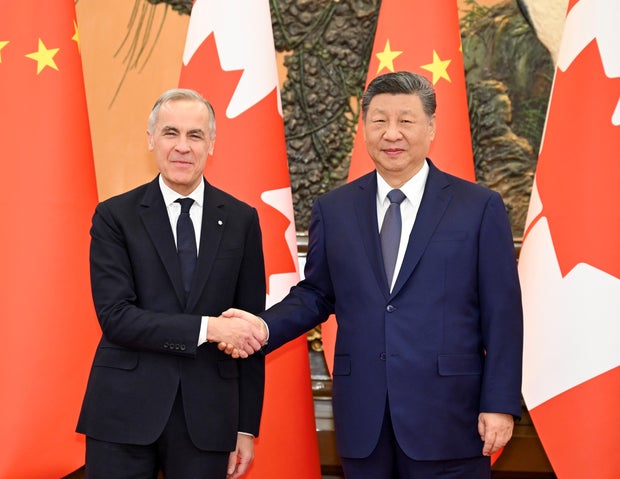
Carney’s visit to China, the first by a Canadian prime minister in eight years, included a meeting with Chinese President Xi Jinping, who expressed a willingness to improve bilateral relations. This meeting was said to open a new chapter for China-Canada relations, paving the way for future cooperation.
Economic Implications
Carney aims to build a less U.S.-dependent economy, particularly in light of ongoing global trade disruptions. He indicated that the deal would create opportunities for the Canadian auto industry. Notably, over half of the Chinese EVs exported to Canada are expected to retail for less than 35,000 Canadian dollars ($25,000) within five years, making them more accessible to Canadian consumers.
Conclusion
The agreement signifies a strategic pivot for Canada as it seeks to enhance its trade relations with China while navigating the complexities of its longstanding alliance with the United States. Carney’s administration is focused on fostering a more diversified economic landscape.
Leave a Reply