**Excerpt:** A recent study reveals that rising temperatures are causing some Antarctic penguins to breed earlier, potentially threatening their survival.
Key Points:
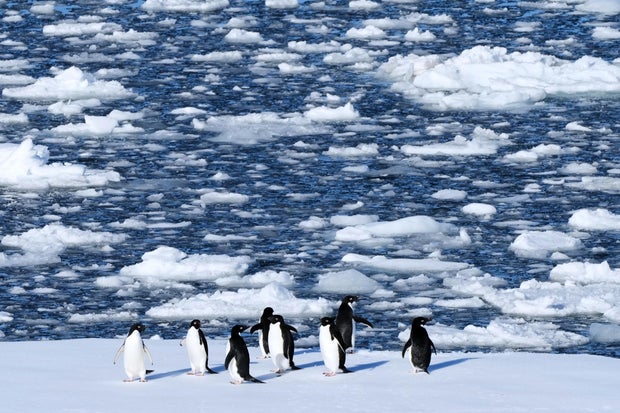
– Antarctic penguins, including Adelie, chinstrap, and gentoo species, are breeding two weeks earlier than a decade ago.
– The average temperature in their breeding grounds increased by 5.4°F from 2012 to 2022.
– Early breeding may lead to food shortages for chicks due to increased competition and changing environmental conditions.
– The gentoo penguin’s rapid breeding shift creates competition with Adelie and chinstrap penguins, which could lead to declines in their populations.
– The study highlights a critical need for ongoing observation to assess the long-term impacts of these changes on penguin populations.
Study Overview
A study published in the *Journal of Animal Ecology* indicates that warming temperatures are forcing certain species of penguins in Antarctica to start their breeding cycles earlier. This shift poses significant risks for the Adelie, chinstrap, and gentoo penguins, which are already facing threats of extinction by the century’s end.
Breeding Changes
Researchers observed that these penguin species are beginning their reproductive processes approximately two weeks earlier compared to a decade ago. The study, conducted using remote cameras over a decade from 2011 to 2021, found that breeding grounds have experienced an increase in temperature by 5.4°F between 2012 and 2022.
Ignacio Juarez Martinez, the lead author of the study and a biologist at Oxford University, noted that this is the fastest recorded shift in breeding timing for any vertebrate species. The earlier breeding may disrupt the synchronization with peak food availability, which is crucial for the development of young chicks.
Competition for Resources
The changes in breeding timing have resulted in increased competition among the penguin species. The gentoo penguins, which have a more varied diet and breed earlier than the other two species, are now competing for resources that were previously less contested.
Fiona Suttle, a co-author of the study, pointed out that the Adelie and chinstrap penguins primarily feed on krill, while gentoo penguins are more aggressive in establishing nesting areas and foraging for food. This has led to observable declines in Adelie and chinstrap populations in certain areas, as gentoo penguins replace their nests.
Broader Implications
The study suggests that climate change is exacerbating competition for food among these penguin species, which is critical for their survival. The decline of chinstrap penguins, in particular, raises concerns, as some models predict they could face extinction by the end of the century.
Martinez explained that warming temperatures in the western Antarctic, which is experiencing rapid changes, lead to less sea ice and an earlier bloom of phytoplankton, the foundation of the marine food chain. This shift not only affects penguin populations but also encourages earlier commercial fishing, further straining available resources.
Conclusion
The implications of this study underscore the urgent need for continued monitoring of penguin populations in Antarctica. As climate change continues to influence their breeding habits and food availability, researchers emphasize the importance of understanding these dynamics to assess potential long-term impacts on these iconic species.
Leave a Reply