
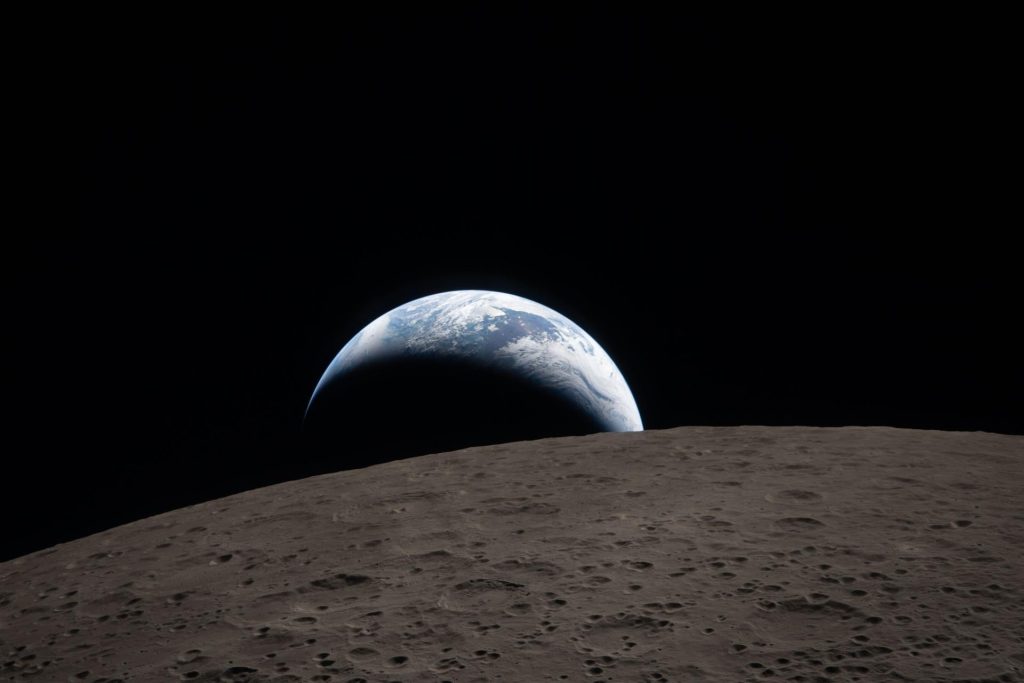
**Excerpt:** The Artemis II mission has released breathtaking images of Earth, the moon, and a solar eclipse, showcasing views never before seen by humans.
Key Points
– Artemis II crew captured stunning images of Earthset and a solar eclipse during their lunar flyby.
– The crew became the first humans to see certain parts of the moon’s far side with the naked eye.
– The eclipse, lasting nearly 54 minutes, was only visible to the crew aboard the spacecraft.
– Astronaut Victor Glover described the view as “unreal” and highlighted the visibility of the moon’s surface against Earthshine.
– The crew is currently on their return journey to Earth, expected to splash down off the California coast.
Overview of Artemis II Mission
The Artemis II mission has made headlines with the release of stunning photographs taken by its crew during a recent flyby of the moon. Among these images is a remarkable shot showing “Earthset,” where Earth is seen dipping behind the moon, with parts of Australia and Oceania visible.
Capturing Unique Views
On April 6, 2026, at 6:41 PM ET, the crew captured the Earthset image through the window of the Orion spacecraft. This moment marked a significant milestone, as the crew became the first humans to view certain areas of the moon’s far side with the naked eye while traveling farther from Earth than any humans before them.
Solar Eclipse Experience
Another notable image shows the moon eclipsing the sun. This eclipse, which lasted nearly 54 minutes, was not visible from Earth. The astronauts used protective eclipse glasses for safety until the moon completely obscured the sun.
NASA described the scene, stating, “From the crew’s perspective, the Moon appears large enough to completely block the Sun.” Astronaut Victor Glover noted that the solar corona remained visible, creating a halo effect around the moon. He emphasized the extraordinary visibility of the moon’s surface during the event.
Return Journey
As the Artemis II crew continues their journey back to Earth, they are expected to splash down near San Diego on Friday evening. The mission has not only provided breathtaking visuals but has also offered unique scientific insights into lunar exploration.
The Artemis II mission represents a significant step forward in human space exploration, furthering our understanding of the moon and beyond.
Leave a Reply