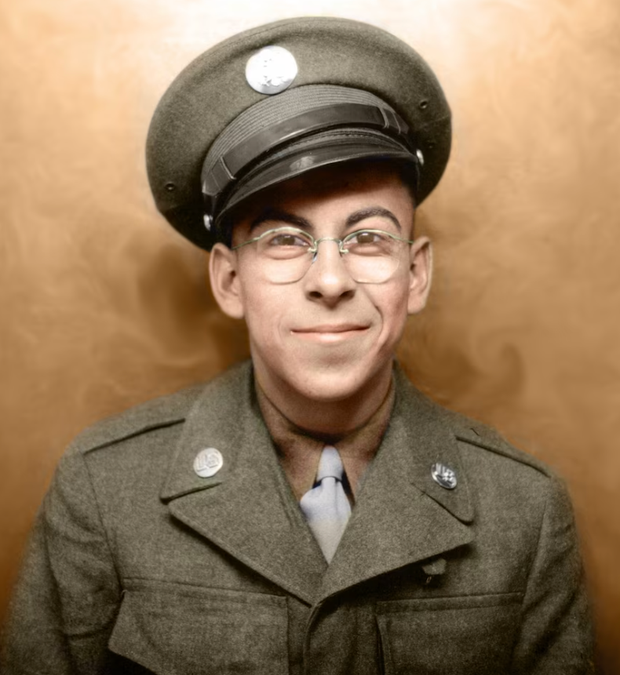
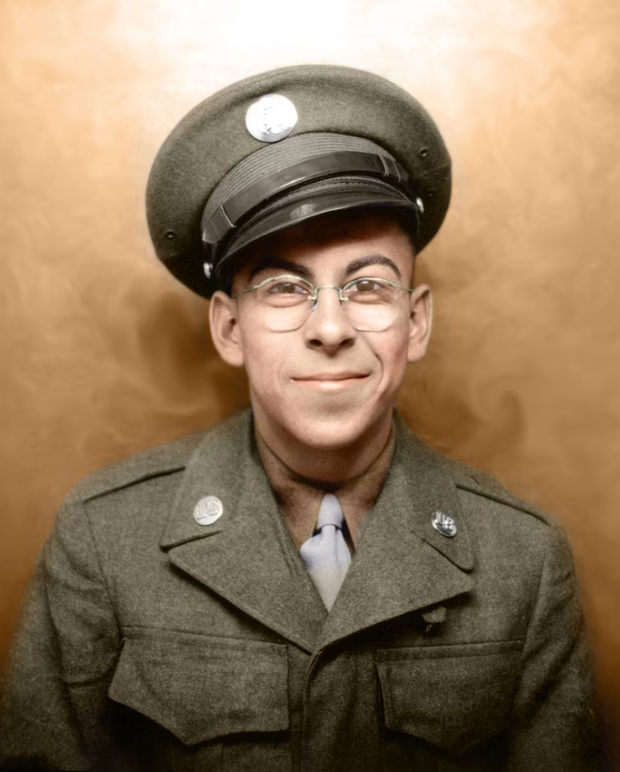
**Excerpt:** The remains of U.S. Army Sgt. Celestino Chavez, missing since the Korean War, have been identified 75 years after his disappearance, bringing closure to his family.
Key Points:
– Sgt. Celestino Chavez was 19 when he was reported missing in action during the Korean War.
– He last communicated with his mother on November 27, 1950, asking for “no tears” if anything happened to him.
– Chavez fought bravely at the Chosin Reservoir, where he was wounded and later presumed dead.
– His remains were identified in 2025 through DNA analysis among others recovered by North Korea.
– Chavez received a military burial with full honors in his hometown of Gallup, New Mexico.
Background on Sgt. Celestino Chavez
Sgt. Celestino Chavez, a 19-year-old from New Mexico, was serving in the U.S. Army during the Korean War when he went missing in action. He enlisted at the age of 17 in 1949 and was assigned to D Battery, 15th Anti-Aircraft Artillery of the 7th Infantry Division.
Last Communication
Chavez’s mother, Lupita Chavez, received a letter from him on November 27, 1950, in which he expressed his desire for “no tears” if anything were to happen to him. Tragically, just three days later, he was severely wounded while defending his position near the Chosin Reservoir, a site of intense combat.
The Battle at Chosin Reservoir
During the battle, which lasted from late November to mid-December 1950, approximately 30,000 United Nations troops faced 120,000 enemy soldiers. The conflict resulted in over 1,000 U.S. service members killed and many more wounded. Chavez was reported missing in action on December 2, 1950, following an ambush of his convoy. He was presumed dead on December 31, 1953.
Identification of Remains
In 2018, North Korea returned 55 boxes believed to contain the remains of U.S. service members who perished during the war. The Defense POW/MIA Accounting Agency (DPAA) conducted analyses on these remains, employing anthropological methods and DNA testing.
On April 15, 2025, exactly 75 years after he was last heard from, Chavez’s remains were positively identified. His family received a briefing on the identification process, though specific details about surviving family members were not disclosed.
Honoring Chavez
Chavez’s remains were brought back to New Mexico, where he was honored with a military burial full of honors in Gallup. He received several posthumous awards, including the Silver Star, Purple Heart, and Korean Service Medal with two Bronze Service Stars. His name has since been removed from the Courts of the Missing, providing a sense of closure to his family and community.
Leave a Reply